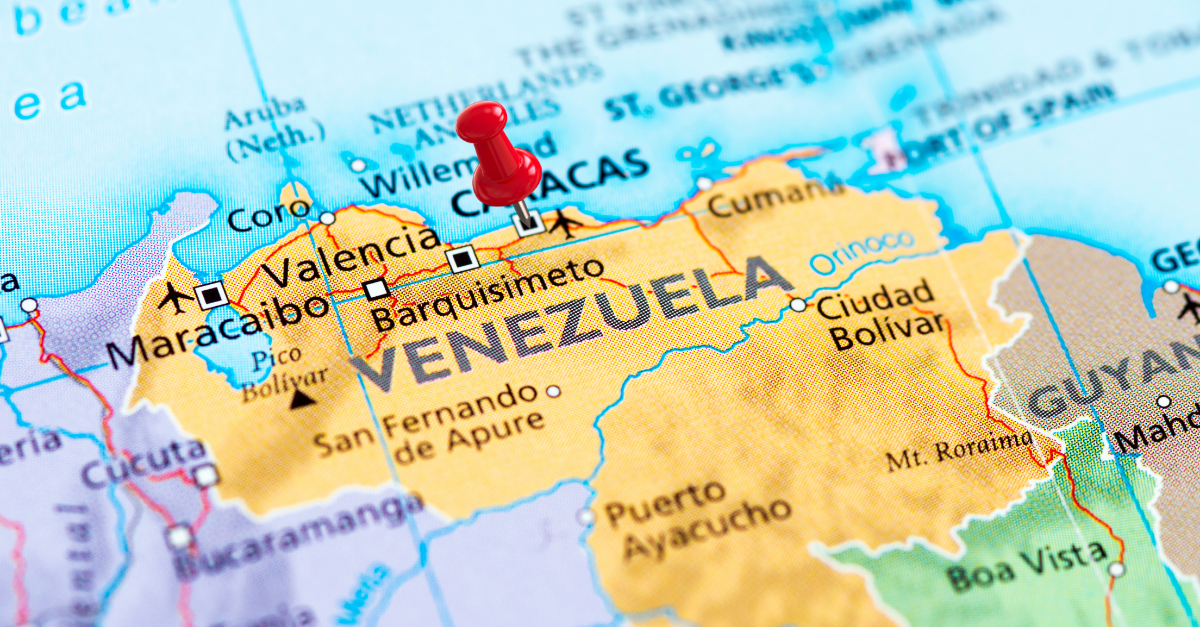
Oil, money, and a stock exchange looking for a second act
Venezuela is a country of extremes: the Caribbean-facing energy giant with extraordinary natural beauty—and a modern economic history shaped by volatility, sanctions, and repeated resets. For investors, it’s hard to think of Venezuela as a “normal” equity market story.
Yet that is precisely what makes it a “hidden gem” candidate in the research sense: when the macro narrative dominates, the local capital market often becomes an early (and sometimes noisy) signal of shifting expectations.
This article looks at Venezuela through the same lens as other “Hidden GEMs” markets: geography and resources, the macro backdrop, the structure of the local exchange, and what it would take for Venezuela to re-enter global investable universes.
A resource superpower with a difficult barrel
Venezuela sits on the world’s largest proven crude oil reserves with around 303 billion barrels in 2023 according to the U.S. Energy Information Administration (EIA). A large share of these reserves is extra-heavy crude concentrated in the Orinoco Belt, which is technically harder and more capital-intensive to produce and upgrade than lighter crudes.
That “resource endowment + complexity” combination matters for equity investors because it tends to shape the whole economy’s investability: the oil sector drives external accounts, fiscal capacity, and hard-currency liquidity but it also requires stable rules, long-dated capital, and functioning infrastructure to translate reserves into sustainable production.
Macro: partial dollarization, multiple prices, fragile confidence
One of the most important “on the ground” realities in Venezuela is that the economy has become partially dollarized in practice—with many prices and transactions occurring in USD (and other currencies in border regions), even while the bolívar remains the national currency.
At the same time, Venezuela has grappled with:
- large inflation swings, including a period of historic hyperinflation;
- a dual exchange-rate reality (official vs. parallel pricing);
- data opacity and inconsistent official reporting that complicate macro analysis.
This matters for local equities because even when a stock index rises sharply in local currency terms, the real story for investors is often about currency translation, access to FX, settlement mechanics, and the credibility of the policy regime.
The Caracas Stock Exchange: small, local, and surprisingly informative
Venezuela’s main equity venue is the Bolsa de Valores de Caracas (BVC). The exchange emphasizes its long operating history (“since 1947”), and it publishes the Índice Bursátil Caracas (IBC) as the headline equity index.
From the exchange’s own market dashboard, you can see a snapshot of how compact the market is: the BVC reports market-level metrics including a USD market capitalization figure (shown around USD 15.7bn on the dashboard at the time of capture), along with index level and trading activity indicators.
What typically defines “BVC risk” for investors
Even without taking a view on politics, the investability questions tend to cluster around:
- Liquidity concentration,
- Currency translation,
- Settlement and custody,
- Governance and disclosure.
In other words: Venezuela can look cheap, expensive, or “up a lot” depending on the unit of account and the path you assume for convertibility and rules.
Recent U.S. intervention as a regime-level shock
In early January 2026, reports of a direct U.S. intervention in Venezuela introduced a regime-level shock into an already fragile macro environment. The episode shifted investor expectations by accelerating discussion around sanctions reset, transitional governance, and renewed external influence over Venezuela’s normalization path. For markets, the key effect was a reframing of country risk: uncertainty moved from prolonged internal stalemate toward externally driven outcomes, widening the range of expectations around sanctions relief, oil commercialization, and access to payment rails. This shift set the stage for subsequent policy actions, including OFAC General License 46 issued on January 29, 2026, which formalized parts of the post-intervention recalibration by selectively reopening oil-related transaction channels under defined conditions.
1) OFAC General License 46 (January 29, 2026)
The U.S. Treasury’s Office of Foreign Assets Control (OFAC) issued General License No. 46, which authorizes—subject to conditions—certain transactions “ordinarily incident and necessary” to activities involving Venezuelan-origin oil by an “established U.S. entity” (defined as organized in the U.S. on or before January 29, 2025).
The license text also details notable constraints (e.g., exclusions involving certain jurisdictions and entities, and reporting requirements for exports to destinations outside the U.S.).
Why it matters for equities: oil cash flows are the economy’s oxygen. Any framework that changes oil commercialization, counterparties, or payment rails can ripple into domestic liquidity, import capacity, and (eventually) earnings expectations.
2) A new hydrocarbons law aimed at opening the sector
Associated with that shift, reporting indicates Venezuela’s acting president signed a law to open the oil sector to privatization / significantly loosen state control, with the goal of attracting investment to rebuild output.
AP’s reporting frames the legislation as promising private companies greater control over production and sales, altering PDVSA’s role.
Why it matters for equities: if the rules become credible and durable (a big “if”), the oil sector could move from being a pure political story back toward an investable industrial story—which tends to improve the “country risk” discount applied across the board.
What would have to change for Venezuela to become “indexable” again?If you think of Venezuela as an “option on normalization,” then the market’s path back into global portfolios usually requires progress on several fronts at once:
- Stable, transparent rules: property rights, taxation, arbitration, contract enforceability.
- FX realism: clearer convertibility, reduced distortions.
- Operational access: custody, settlement, and reliable trading infrastructure.
- Sanctions clarity: clear permissions, durable authorizations, and predictable compliance perimeter.
- More investable breadth: enough liquid securities to support diversified exposure.
Venezuela in the MarketVector™ Total Global Equity Index
The Caracas Stock Exchange (BVC) has a small roster of equities with most trading concentrated in about 10 names that capture a large share of market volume and capitalization. Many listed companies are banking and financials, industrial/consumer goods, or traditional Venezuelan brands (e.g., rum, packaging). However, political factors (socialist-oriented policies with centralized political control and authoritarian characteristics) constrained listings and drained market liquidity.As of the 2025 Q4 review, the MarketVector™ Total Global Equity Index (MVTGLE) includes only one Venezuelan company: C.A. Ron Santa Teresa (RST), a long-established rum producer and consumer staples company that represents one of the few branded, export-oriented businesses listed locally.RST’s inclusion is driven by relative liquidity, as measured by three-month average daily trading volume (ADTV), rather than by market capitalization. The MVTGLE applies a liquidity cutoff based on ADTV using a formula designed to ensure that at least one security in each market meets the threshold at the current quarterly review as well as at the previous two quarterly reviews.
This approach effectively establishes a minimum liquidity standard in markets with thin or irregular trading. In Venezuela, RST is currently the only stock that consistently exhibits higher relative liquidity than its peers over multiple periods, enabling it to qualify for inclusion in the index.
Price of RST in USD ( December 31, 2024 - February 6, 2026)
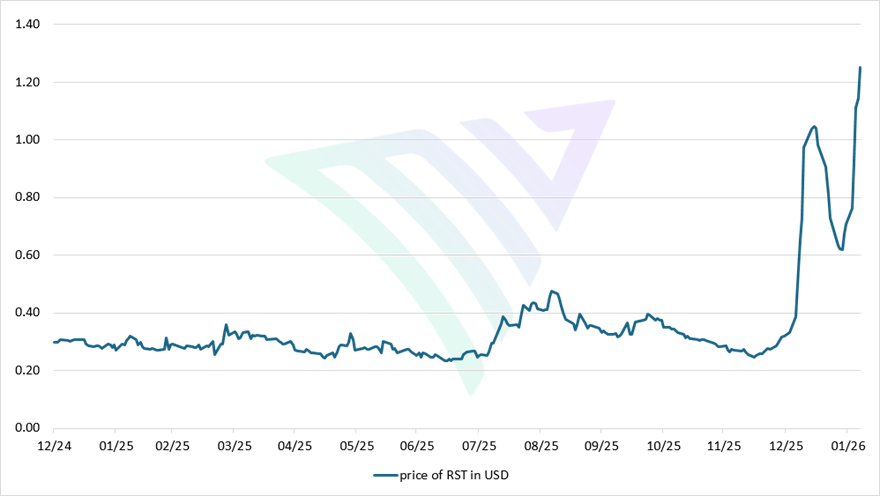
Source: MarketVector. Data as of February 9, 2026.
Sources:
- https://www.bolsadecaracas.com/
- https://www.eia.gov/international/content/analysis/countries_long/Venezuela/pdf/venezuela_2024.pdf
- https://www.seco.admin.ch/dam/seco/en/dokumente/Aussenwirtschaft/Wirtschaftsbeziehungen/L%C3%A4nderinformationen/Lateinamerika/wirtschaftsbericht_venezuela.pdf.download.pdf/Wirtschaftsbericht%20_Venezuela_2025%20extern.pdf
- https://apnews.com/article/5784394afdc3ee0017d2f41427253fd8
- https://stockanalysis.com/list/caracas-stock-exchange/?
- https://finanzasdigital.com/de-32-acciones-que-se-cotizan-en-la-bvc-unas-10-se-llevan-936-del-mercado/#
- https://seekingalpha.com/article/4864346-venezuelas-oil-rebuild-case-oilfield-services-refiners?
- https://www.straitstimes.com/world/united-states/us-eases-some-sanctions-on-venezuelan-oil-industry?ref=latest-headlines&
- https://www.marketvector.com/indexes/global/marketvector-total-global-equityhttps://finance.yahoo.com/news/treasury-license-allows-u-oil-231025333.html?
About the author:
Emre Camlilar serves as the Head of Index Operations for MarketVector Indexes™ (“MarketVector”) globally since late 2018. He is an indexing expert with 12 years of experience in index management, maintenance, and development. Prior to joining MarketVector, Emre gathered experience in different fields of finance, including financial risk management. He holds a Master of Sciences in Economics from the University of Freiburg, Germany, and is a CFA charterholder.
Get the latest news & insights from MarketVector
Get the newsletterRelated:
Most popular
-
 Commentary
Hidden GEMs: Ukraine
-
 Commentary
MarketVector Index(es) of the Month: Space