
Why Energy Infrastructure Is Central to Energy Security
Energy is getting treated less like a commodity and more like a strategic asset. That shift puts a spotlight on the “in-between” layer of the system: the pipes, tanks, terminals, gathering networks, and export facilities that determine whether production becomes usable supply. When geopolitics flare up, trade routes change, or demand swings unexpectedly, it’s often infrastructure that decides what can move, where it can go, and how quickly markets can respond.
How Pipeline Bottlenecks Create Value in Energy Infrastructure
Energy infrastructure tends to disappear into the background until it’s constrained. The Permian Basin shows how this plays out: when production climbs faster than pipelines and processing can keep up, constraints emerge and the value of infrastructure suddenly stands out. In those moments, the companies that already own the right routes, storage, and connections often gain leverage.
A concrete example is Waha, the Permian’s main gas pricing point. When takeaway gets tight, Waha can disconnect sharply from national benchmarks. In 2019 it averaged about $1.66/MMBtu below Henry Hub as production outpaced pipeline capacity. And in more extreme moments, congestion has pushed prices into negative territory, such as May 2025, when scheduled pipeline maintenance helped drag Waha down to roughly -$1.52/MMBtu.
In other words, when pipelines are full, gas can’t get out, so the local price drops. Sometimes it drops so much that producers effectively must pay to move it, making any infrastructure that clears the “traffic jam” suddenly much more valuable.
How U.S. LNG Export Growth Is Reshaping Natural Gas Infrastructure
The ongoing buildout of U.S. LNG export capacity is a big part of why the theme feels relevant right now. As new export facilities come online through 2025–2026, North American natural gas stops being purely a domestic story and becomes increasingly tied to global pricing and global reliability.
How Energy is Captured in Thematic Indexes
As energy security moves from slogan to action, our indexes are designed to track the real-world systems that keep energy reliable. The MVIS® North America Energy Infrastructure Index (MVEINC) focuses on the largest, most liquid North American companies tied to the “pipes and tanks” layer of the market: transportation, storage, and related midstream infrastructure.
Chart 1: Index Performance (MVEINC Total Return levels rebased to $1000)
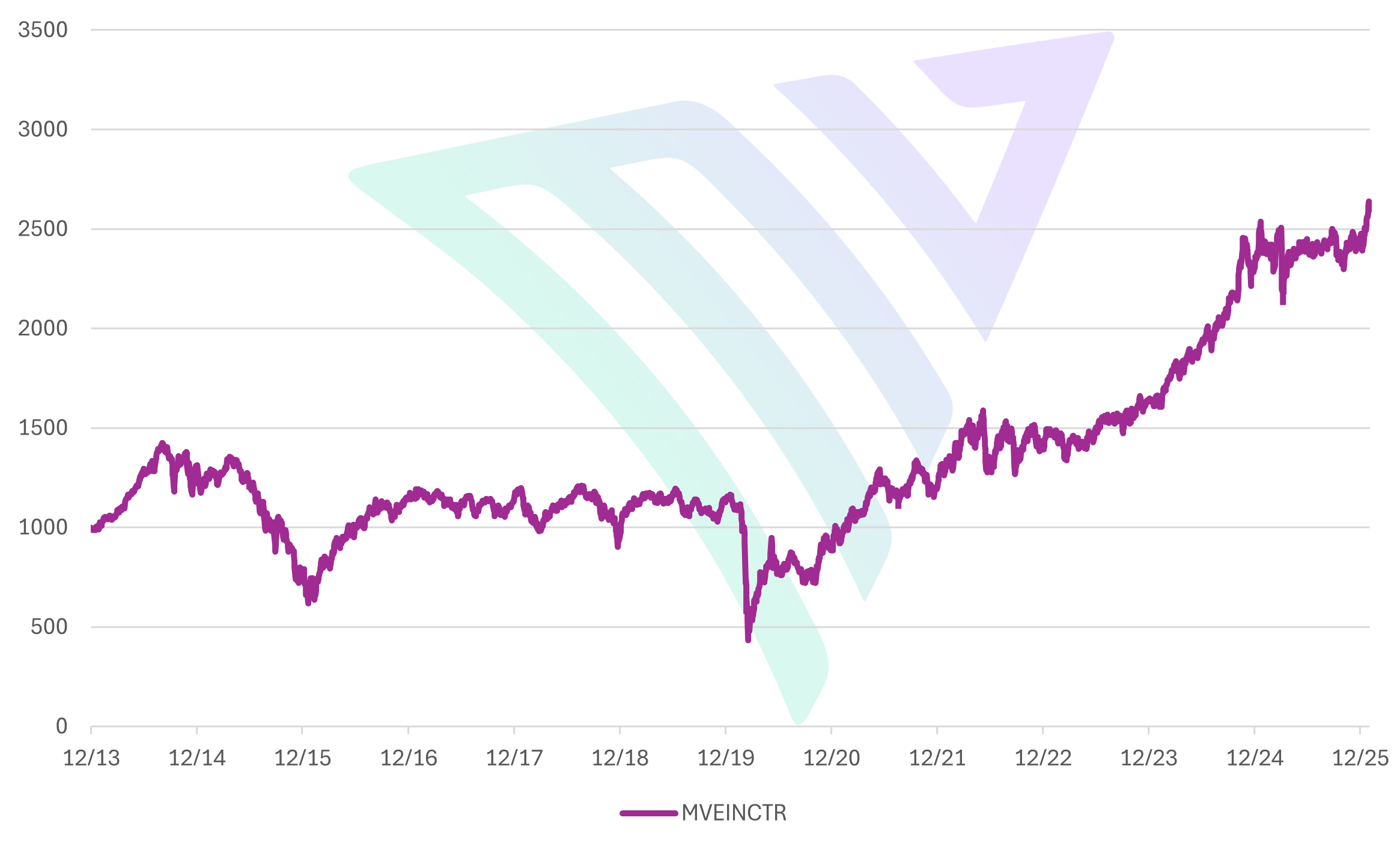
Source: MarketVector. Data as of February 3, 2026.
Similarly, the Truth Social™–Yorkville American Energy Security Index (TSENS) takes a wider view of the same backdrop, spanning a broader set of companies that contribute to U.S. energy security, from traditional oil and gas to emerging energy sources, plus electric transmission and distribution.
Chart 2: Index Performance (TSENS Total Return levels rebased to $1000)
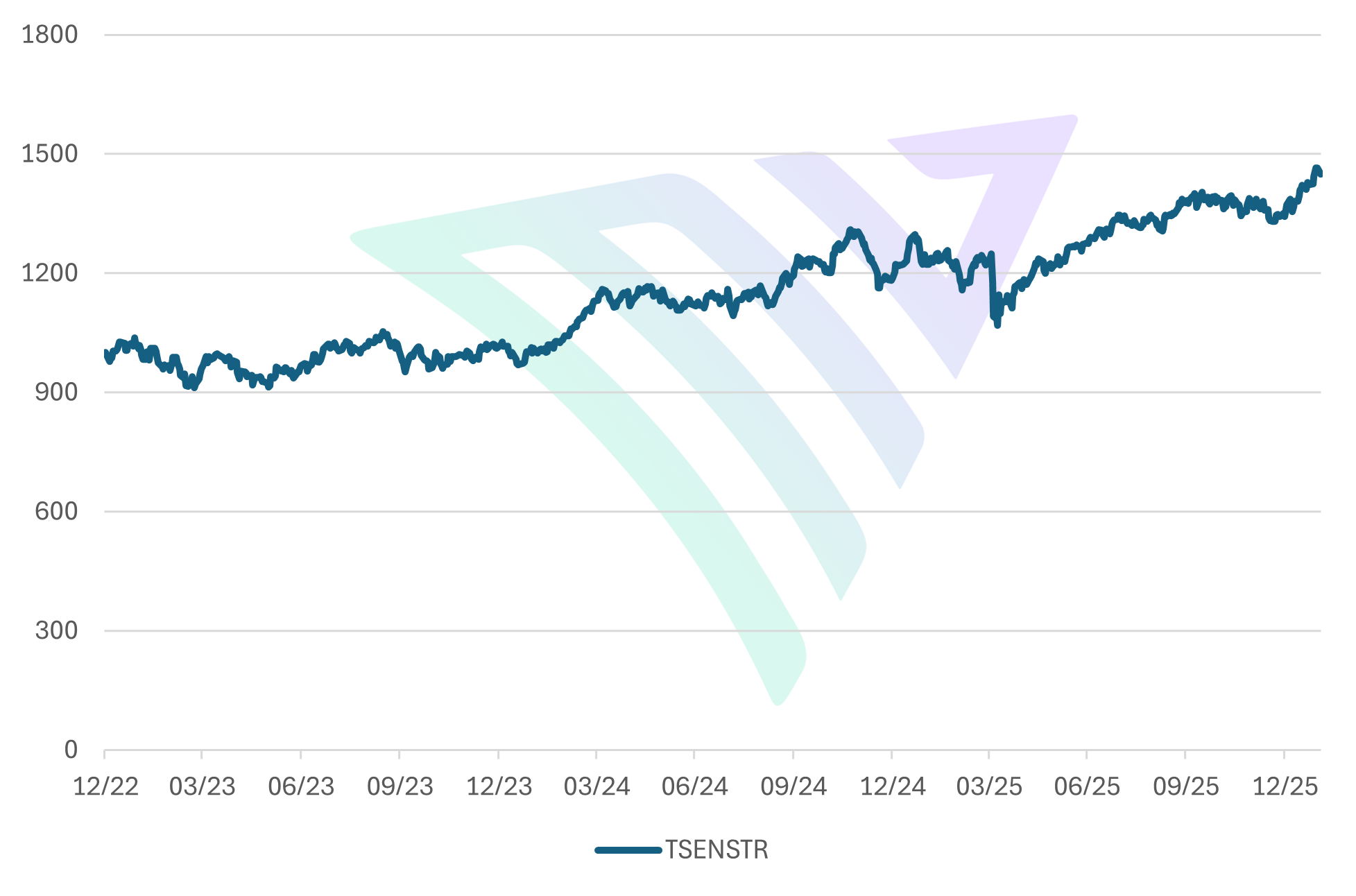
Source: MarketVector. Data as of February 3, 2026.
About the author:
Jesse Nacht is an Index Research Associate at MarketVector IndexesTM (“MarketVector”). His core responsibilities include index development and design. He has an MA in International Economics and Finance from the International Business School at Brandeis University.
For informational and advertising purposes only. The views and opinions expressed are those of the authors but not necessarily those of MarketVector Indexes GmbH. Opinions are current as of the publication date and are subject to change with market conditions. Certain statements contained herein may constitute projections, forecasts, and other forward-looking statements that do not reflect actual results. It is not possible to invest directly in an index. Exposure to an asset class represented by an index is available through investable instruments based on that index. MarketVector Indexes GmbH does not sponsor, endorse, sell, promote, or manage any investment fund or other investment vehicle that is offered by third parties and that seeks to provide an investment return based on the performance of any index. The inclusion of a security within an index is not a recommendation by MarketVector Indexes GmbH to buy, sell, or hold such security, nor is it considered to be investment advice.
Get the latest news & insights from MarketVector
Get the newsletterRelated:
Most popular
-
 Commentary
Goal! Small Country, Big Impact
-
 Commentary
Hidden GEMs: Ukraine