
We attended the Precious Metals Summit and Gold Forum Americas Conferences in Colorado. These events bring investors together with the vast majority of gold companies globally. While weak gold prices and inflationary pressures were areas of concern, the miners were more interested in showcasing their operating abilities, property attributes, and project pipelines. Managements are less concerned about financial risks due to strong balance sheets and lighter capital requirements than past down cycles.
However, many companies are expecting cost inflation to persist into 2023, with little visibility beyond. With rising costs, some of the majors are reviewing reserve pricing with an eye to raising it roughly $100 from the industry average of around $1.250 per ounce. Producers generally calculate reserves at the base of the long-term gold price trend, which is currently around $1.400. This would also allow companies to avoid write-downs as they run reserve economics using a higher price along with the higher costs.
All producers are committed to continuing dividend payouts and buybacks. In fact, one has actually boosted its share buyback program. However, if the gold price remains at current levels, we may see some companies trim dividends, particularly those who link dividends to cash, cash flow, or the gold price.
MVIS® Global Junior Gold Miners Index
10/21/2021-10/21/2022
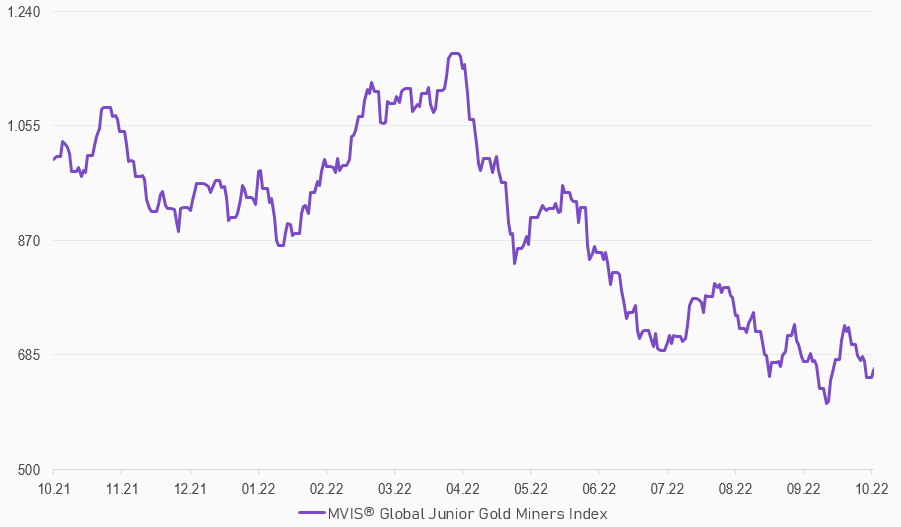
Source: MarketVector IndexesTM. All values are rebased to 1,000. Data as of October 21, 2022.
Get the latest news & insights from MarketVector
Get the newsletterRelated:
Most popular
-
 Commentary
Goal! Small Country, Big Impact
-
 Commentary
Hidden GEMs: Ukraine