
We are not in normal times. The consequences of a global pandemic juxtaposed with truly unprecedented monetary and fiscal stimuli will be with us for many years to come. Emerging markets have traditionally underperformed in a risky environment but, in general, we believe the behavior of the asset class has not been as bad as many might have predicted. A large part of the negative outcome was generated by the abnormal strength of the U.S. dollar, driven by a global “shortage” of dollars. This has started to normalize and we continue to have a reasonable hope for U.S. dollar stability in the coming quarters. Whilst it may not matter in the short term, emerging markets currencies are cheap, particularly versus the U.S. dollar.
Whilst the overall impact of the pandemic has been very negative across all equity asset classes, there is some silver lining in a very dark cloud. It is clear that the golden era of globalization has gone and concentrated supply chains will be increasingly questioned. The “business model” of many emerging countries as they progress from low to middle income was predicated on cheap labor and the comparative advantage that this endowed. Either that or as a supplier of significant commodity resources. We believe both “models” will be increasingly challenged in the future and successful emerging markets economies will be based on innovation, education, domestic demand and consumption. Industries such as healthcare, e-commerce and education may be the most fruitful areas of investment going forward, we believe. And one consequence of the pandemic is that it accelerates trends in some of these areas and changes behaviors towards increased consumption of certain parts of these industries.
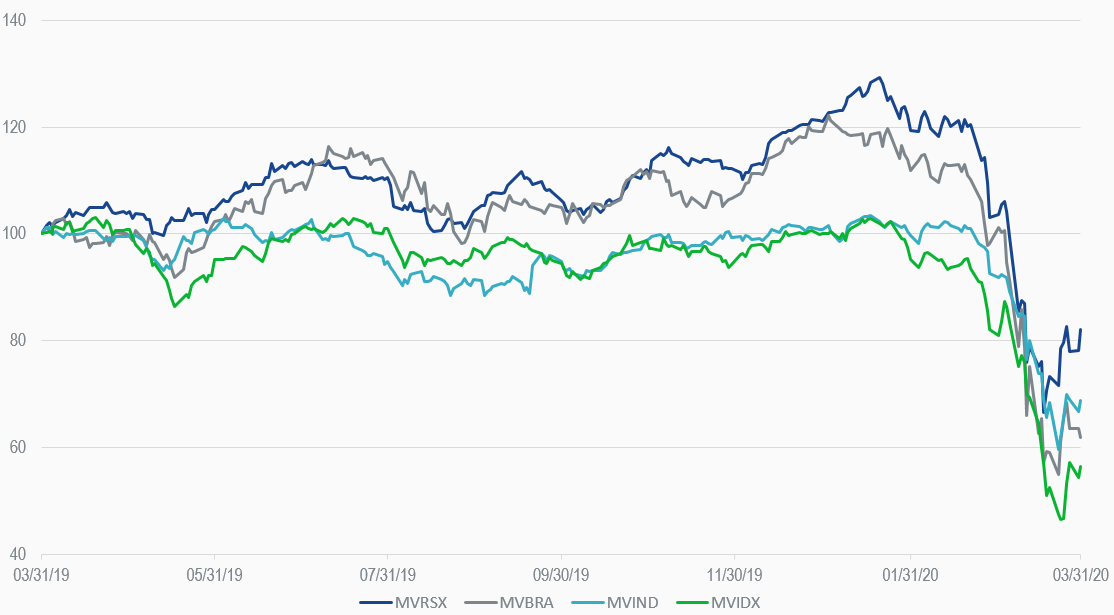
MVIS Russia Index vs. MVIS Brazil Index vs. MVIS India Index vs.
MVIS Indonesia Index
03/31/2019-03/31/2020
Get the latest news & insights from MarketVector
Get the newsletterRelated:
Most popular
-
 Commentary
Goal! Small Country, Big Impact
-
 Commentary
Hidden GEMs: Ukraine