In the world of digital assets, there is a lot of talk about decentralized software and its benefits. But what many people don't realize is that for decentralized software to truly be decentralized, the hardware supporting it must also be decentralized. This is where infrastructure comes into play.
Infrastructure projects, such as decentralized file storage, wireless internet, and cloud computing, are necessary for the growth of the new decentralized internet, also known as Web3. Without these infrastructure projects, the decentralized software would be vulnerable to censorship. A token model can help to bootstrap these projects.
When coupled together, these infrastructure protocols function like LEGOs, allowing developers to construct new and beneficial user-facing Web3 applications. For example, the development of Chainlink oracles has enabled the creation of lending and borrowing platforms like AAVE and Compound.
In short, for decentralized software to truly be decentralized and for Web3 to grow, we need decentralized infrastructure. So, next time you hear about decentralized software, remember that it's not just about the software, it's also about the hardware.
MVIS® CryptoCompare Infrastructure Application Leaders Index
24/1/2022-24/1/2023
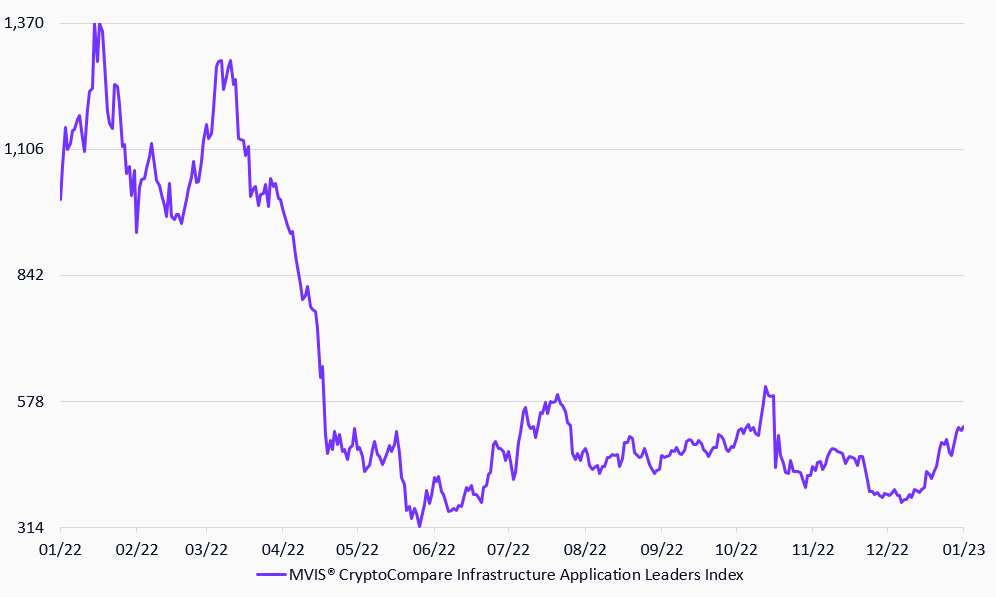
Source: MarketVector IndexesTM, data as of January 24, 2023.
This topic is explored in some more detail in a whitepaper published in our MVIS Insights of “Infrastructure Applications_The Picks and Shovels of the Digital Asset Revolution.pdf”.
Get the latest news & insights from MarketVector
Get the newsletterRelated:
Most popular
-
 Commentary
Goal! Small Country, Big Impact
-
 Commentary
Hidden GEMs: Ukraine