Autonomous driving vehicles, also known as self-driving cars or driverless cars, are vehicles that are capable of sensing their environment and navigating without human input. These vehicles use a combination of technologies, including artificial intelligence (AI) software, light detection & ranging (LiDAR), radar, and computer vision, to understand their surroundings and make decisions about their movements.
One of the main advantages of autonomous driving vehicles is that they have the potential to significantly reduce the number of accidents caused by human error. They also have the potential to improve traffic flow, reduce congestion, and lower emissions.
In addition to the safety and environmental benefits, autonomous driving vehicles are also seen as a potentially profitable investment. The global market for autonomous vehicles is expected to reach $2,161.79 billion by 2030, growing at a CAGR of 40.1% during the forecast period. However, as technology matures and more companies enter the market, the industry’s economic dynamic is rapidly changing.
The BlueStar® Autonomous Driving Index (BAUT) tracks the performance of global companies that partake in the adoption of autonomous vehicles, such as chipmakers, sensor manufacturers, and software developers.
BlueStar® Autonomous Driving Index
1/31/2022-1/31/2023
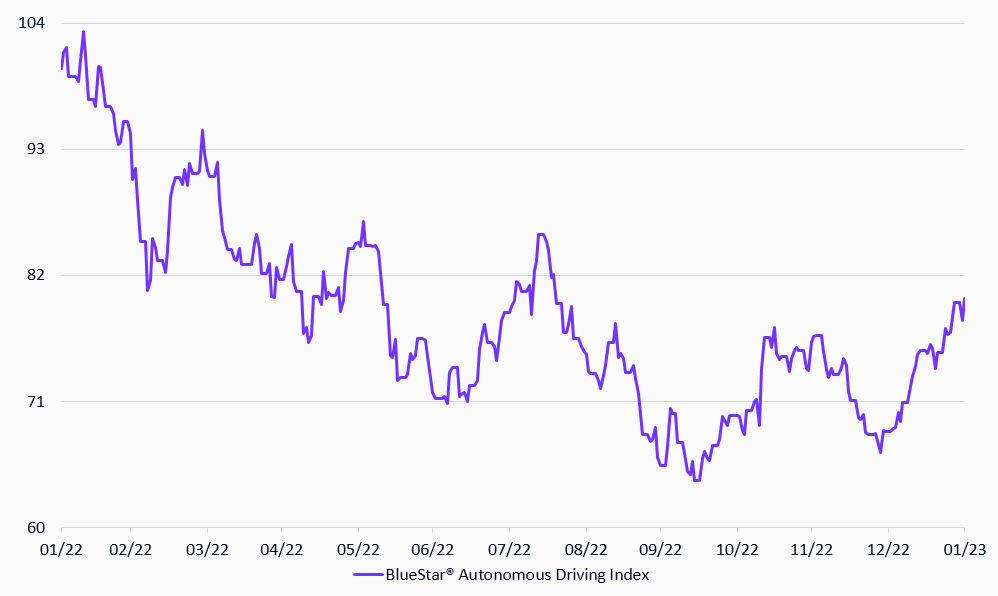
Source: MarketVector IndexesTM. Data as of January 31, 2023.
For more information on our family of indexes, visit us.
Get the latest news & insights from MarketVector
Get the newsletterRelated:
Most popular
-
 Commentary
Goal! Small Country, Big Impact
-
 Commentary
Hidden GEMs: Ukraine