Food prices in 2021 have increased to their highest levels in six years. According to the United Nations Food and Agriculture Organization (FAO), which publishes the Food Price Index each month, food prices in January marked the sharpest month-over-month and year-over-year rise in a decade. In total, global food prices rose more than 30% from the trough in May 2020 to April 2021. These trends point towards what could be the onset of food inflation, or so-called "agflation".
What Is Causing Agflation?
The most significant factors driving the global rally in food prices have come from China, which first started seeing localized food inflation in 2019. During that year, African swine fever decimated China’s hog herd, which is the world’s largest, causing an 11 million ton pork deficit. Then, in 2020, the country's poor harvest -- caused by severe flooding in the southern region and droughts in the west -- compounded the already dire situation for the country's roughly 26 million hog farmers who depend on in-country crop production for affordable animal feed. Domestic prices for corn, soybeans, and meat skyrocketed, with some regions of the country experiencing prices rising more than 50%.
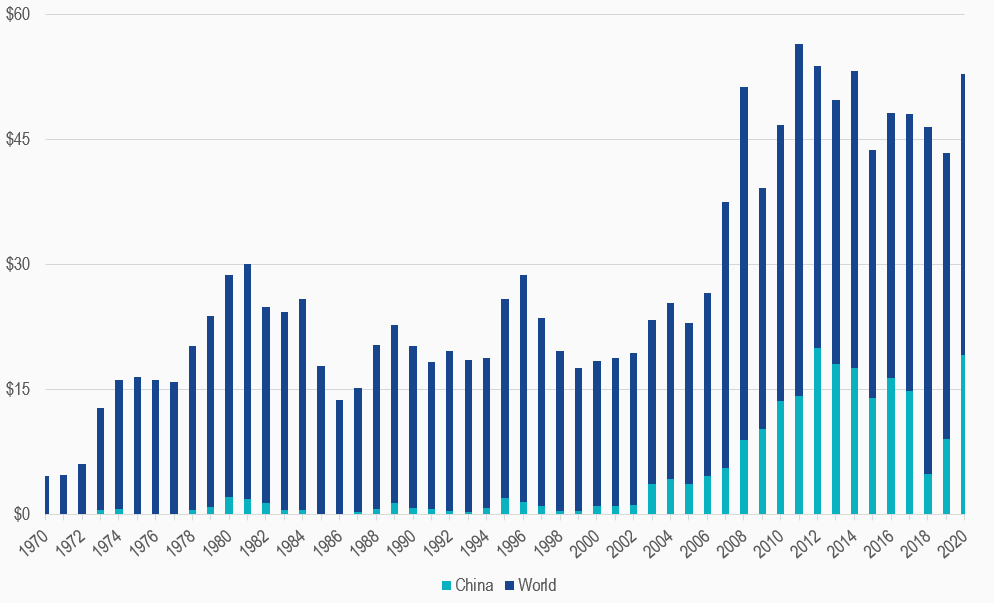
With the support of government subsidies, Chinese hog farmers have acted aggressively to rebuild their herds. To meet the mounting demand, China has begun an aggressive agricultural import program in an effort to pare domestic food prices and rebuild its strategic reserves.
US Agricultural Exports
Doing Nothing Is Not an Option
The United Nations expects that by 2050 the world’s population will have grown to roughly 10 billion, which is 28% higher than the 7.8 billion people on the planet today.1 Nearly all of this growth will occur in developing countries. Urbanization will continue at an accelerated pace, resulting in approximately 70% of the world's population living in urban areas by 2050, an increase from the roughly 54% today. More people will enter the middle-class than at any time in history, which will have consequences for the global agriculture ecosystem2.
There is a significant shortfall between the amount of food the world produces today and the amount that will be needed to feed the population in 2050. To achieve this in an environmentally sustainable way, the agriculture industry must embrace new technologies that generate higher yields using fewer resources. By adopting smarter ways of doing business, the industry has the ability to thwart a worsening food insecurity crisis.
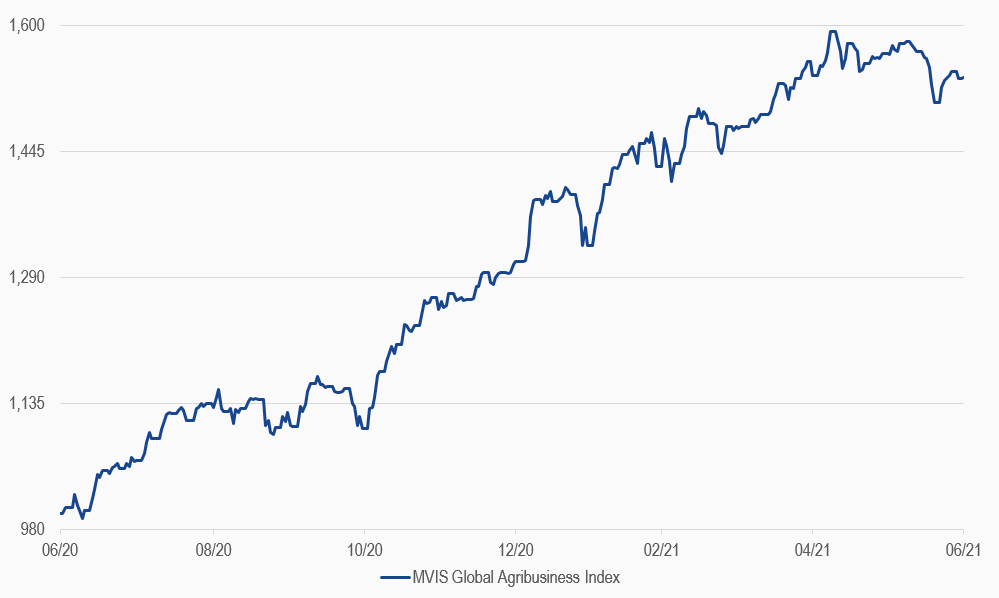
MVIS Global Agribusiness Index
30/06/2020-30/06/2021
Get the latest news & insights from MarketVector
Get the newsletterRelated:
Most popular
-
 Commentary
Goal! Small Country, Big Impact
-
 Commentary
Hidden GEMs: Ukraine